


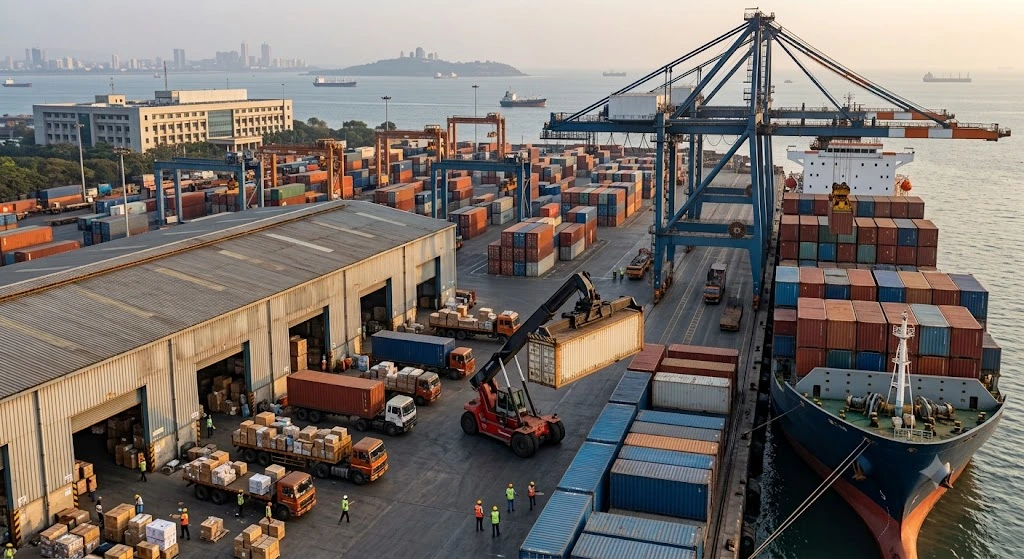
As global power dynamics evolve, shifting policies and fluctuating market rates have transformed a linear model into a volatile, interconnected system. Amid this landscape, working with a strategic NVOCC (Non-Vessel Operating Common Carrier) has also shifted from a simple lane-purchasing tactic to a core requirement for an end-to-end distribution infrastructure.
Import-export managers and procurement heads who are navigating cross-border supply lines require a smart infrastructure that can withstand severe port congestion and volatile spot markets. Modern asset-right operators are transforming how businesses approach routing stability and scale towards international growth.
Why Cross-Border Shipping Has Become More Complex For Businesses
When international logistics has moved away from multi-layered operations to systematic supply chain volatility and regular blank sailings, where space availability can vanish overnight. When a company relies on a single vessel operator, it leaves the enterprise exposed to vulnerabilities of that carrier’s specific alliance network.
Nowadays, where regulatory compliance policies across global trade corridors are tightening, this creates financial penalties for minor clerical errors. Customer satisfaction has also undergone a paradigm shift, where industrial buyers and distributors now treat real-time visibility as a mandatory operational baseline. Localized port congestions and labor disputes can disrupt global production instantly. A rigid shipping setup can become an active threat to corporate margins.
Industry Perspective:
How Modern NVOCCs Create Strategic Value Beyond Freight Movement
Top providers of asset-light shipping services act as independent service contractors to VOCCs, offering an agile transportation intermediary that can provide crucial insulation from the risk of any particular carrier’s default. Done by virtue of having an independent contract with multiple ship operators.
Such an approach offers tremendous benefits to the cargo owner in terms of flexibility. In the event of a capacity shortage on a specific trade lane or equipment shortfall, a reliable network partner can quickly redirect a shipment on another carrier or terminal, rather than renegotiate an entire contract. This is precisely what gives shippers a competitive advantage over their peers using single-carrier solutions.
Key Ways NVOCCs Are Transforming Cross-Border Shipping
-
Capacity Flexibility in Dynamic Markets
Amidst the current uncertain environment, the ability to secure space is crucial. By leveraging large freight volumes from diverse clients, asset-light operators can offer guaranteed space allocations, even in the most competitive markets. With the right network of vessel operators, an efficient NVOCC can help provide alternate routings and capacity when a direct carrier is unavailable.
Best Practices:
You must avoid putting all your eggs in one basket when it comes to shipping. Work with an alternate carrier base to ensure that you’ve unrestricted ocean freight options.
-
Enhanced Cargo Visibility and Shipment Control
Limited visibility while shipping internationally can lead to a prolonged safety stock duration, resulting in unnecessarily high inventory freight charges. The latest advancements in container management have allowed businesses to have much better control over their global freight movements with better demand planning and inventory management.
-
Trade Lane Optimization and Network Efficiency
By analyzing transshipment options and port congestion levels, effective logistics partners can help design the most efficient shipping route without spending too much. Beyond just transporting goods from point A to point B, trade lane optimization sets the stage for international shippers.
Best Practices:
It’s crucial to analyze the most efficient routing options, including transshipment opportunities, that ensure the shortest transit time possible for international cargo. A logistics manager should always look for ways in which shipping lanes can be optimized to reduce costs without longer lead times.
-
Improved Freight Consolidation Strategies
For companies that don’t have a steady supply of LCL shipments, utilizing advanced LCL shipping methods can offer them immense benefits. International shippers can ensure that they only pay for the space their cargo covers by taking advantage of advanced freight consolidation methods.
-
Supply Chain Disruption Support
When certain international crises derail the global supply chain, the right logistics partner can prove invaluable to a company’s survival. An effective logistics partner can act as a shock absorber by minimizing the impact of supply chain disruptions with alternate routing and expedited transit.
The Competitive Advantages of Working With the Right NVOCC
Working with the right logistics partner yields multiple advantages for an international shipper. The most immediate benefit is the ability to provide shipment predictability to the customer. After all, with a resilient supply chain, it becomes much easier to meet customer expectations consistently. A strong global carrier network helps the international logistics manager to expand their entering into new global markets.
Expert Insight:
“Shipment predictability is often the difference between winning and losing a deal. The ability to provide a resilient supply chain has helped us to capture significant market share as our customers’ expectations continue to rise.”
Future Trends That Will Shape the Role of NVOCCs In Global Trade
The global logistics space is going through a digital transformation, with data analytics playing a crucial role in global trade. Shippers are now demanding end-to-end visibility, facilitating the development of innovative visibility solutions. As customer demands continue to evolve, real-time visibility into international freight will soon become the new normal.
Industry Perspective:
The near future of international trade will be defined by data analytics and enhanced digital capabilities. Shipment visibility solutions that go beyond tracking the location of a container will become the new normal.
How Total Transport Helps Meet Modern Cross-Border Shipping Demands
Meeting complex modern-day shipping demands requires more than just an extensive network of shipping lines. Total Transport understands the importance of end-to-end shipment management, allowing us to provide our customers with the necessary supply chain visibility. From ocean freight logistics to multimodal logistics solutions, our expertise in the international logistics sector helps us to offer our clients best-in-class supply chain solutions. By focusing on Container Logistics Services, we help organizations to maximize their international shipping solutions. We provide them with the flexibility to grow their market footprint while also minimizing their supply chain spending. From ocean freight services to freight forwarding services, we offer end-to-end supply chain solutions that ensure your cargo moves seamlessly across borders without worrying about international market conditions.
NVOCC Business Impact Framework
|
Challenges |
Business Impact |
NVOCC Contribution |
|
Capacity Constraints |
Rolled cargo and delayed market entry |
Carrier diversification and secured space allocations |
|
Supply Chain Volatility |
High expedited freight costs |
Dynamic routing and immediate risk management |
|
Poor Cargo Visibility |
Bloated inventory and poor forecasting |
Real-time tracking and shipment control |
|
Inefficient Routing |
Extended transit times and high costs |
Trade lane optimization and network analysis |
|
LCL Freight Costs |
Premium shipping expenses for small loads |
Advanced freight consolidation strategies |
Key Takeaways
- Your logistics partner can become a competitive advantage with enhanced capacity management and strategic trade lane optimization.
- Diversified carrier partnerships can limit risk exposure by shielding you from local market volatilities.
- Advanced real-time shipment tracking helps to make better inventory management and demand forecasting decisions.
- Optimized transshipment networks help to reduce overall logistics costs by eliminating unnecessary freight spending.
- Collaborating with experts provides the supply chain manager with the multimodal control needed to ensure business continuity.
Quick Answers
- How do NVOCCs improve cross-border shipping?
NVOCCs improve shipping by offering flexible carrier options and alternate routing during disruptions, which ensure much-needed agility in international freight movement.
- Why are NVOCCs becoming more important in global trade?
As global trade becomes more complex, companies are relying on logistics partners to manage capacity constraints, carrier volatility, and supply chain disruptions.
- How do NVOCCs improve supply chain resilience?
An extensive carrier network and an efficient logistics partner can act as a shock absorber, utilizing alternate routes whenever there’s a disruption in the primary routing options.
- What business value do modern NVOCCs provide?
Beyond managing freight, a logistics partner offers strategic value to international shippers through trade lane optimization and shipment visibility to protect the business from disruptions while ensuring cost-efficiency.
Conclusion
The evolution of modern NVOCC has changed the international logistics landscape forever. From being just consolidators of ocean freight, these logistics intermediaries have enhanced their role by offering extensive supply chain optimization services to shippers. Modern NVOCCs have become more than just ocean freight forwarders by providing strategic shipping flexibility, enhanced shipment visibility, and trade lane optimization.
Choosing the right logistics partner has become crucial in today’s volatile global trade environment because it can be the difference between business growth and stagnation. To future-proof your global supply chains, connect with Total Transport to discover how we optimize your cross-border freight movement.
FAQs
- How do NVOCCs support cross-border shipping operations?
NVOCCs support operations by negotiating space with multiple ocean carriers, managing shipping documentation, optimizing routing, and providing the flexibility to shift between alliances to prevent any shipping delays.
- Why are NVOCCs important in global trade?
They are essential intermediaries that facilitate international trade by providing businesses with extensive carrier options, competitive pricing, and much-needed flexibility in a highly unpredictable international logistics environment.
- How do NVOCCs improve cargo visibility?
Modern logistics partners utilize digital tools and enhanced API connectivity with carriers to provide shippers with real-time visibility into their international freight.
- How do NVOCCs help manage supply chain disruptions?
When faced with supply chain disruptions, logistics partners leverage their diverse carrier networks and alternate transportation modes to keep critical inventory moving.
- What should businesses look for in an NVOCC partner?
Businesses should look for a logistics partner with extensive global networks, trade lane expertise, enhanced shipment visibility, and proven crisis management capabilities to help minimize supply chain disruptions.
- How does Total Transport support international shipping requirements?
Total Transport meets international shipping requirements by providing end-to-end logistics support that ensures secure and timely delivery of your freight.

Recent Comments